Zagato Maserati GS

Design House Zagato has launched with Maserati a limited series called Maserati GS Zagato, only one year after the presentation of the Ferrari 575GTZ. The car follows the design lines of sport models offered to those clients with big bank accounts by the auto producers, in the 50 she car is built on the base of Spyder Maserati and incorporates a series of aluminum components, it uses the trident as logo on the hood and it signals the implication of Zagato House by a discreet Z on the wing. The combination remains a winning one and it states again the powerful mechanics, elegance although sporty style from Italy.
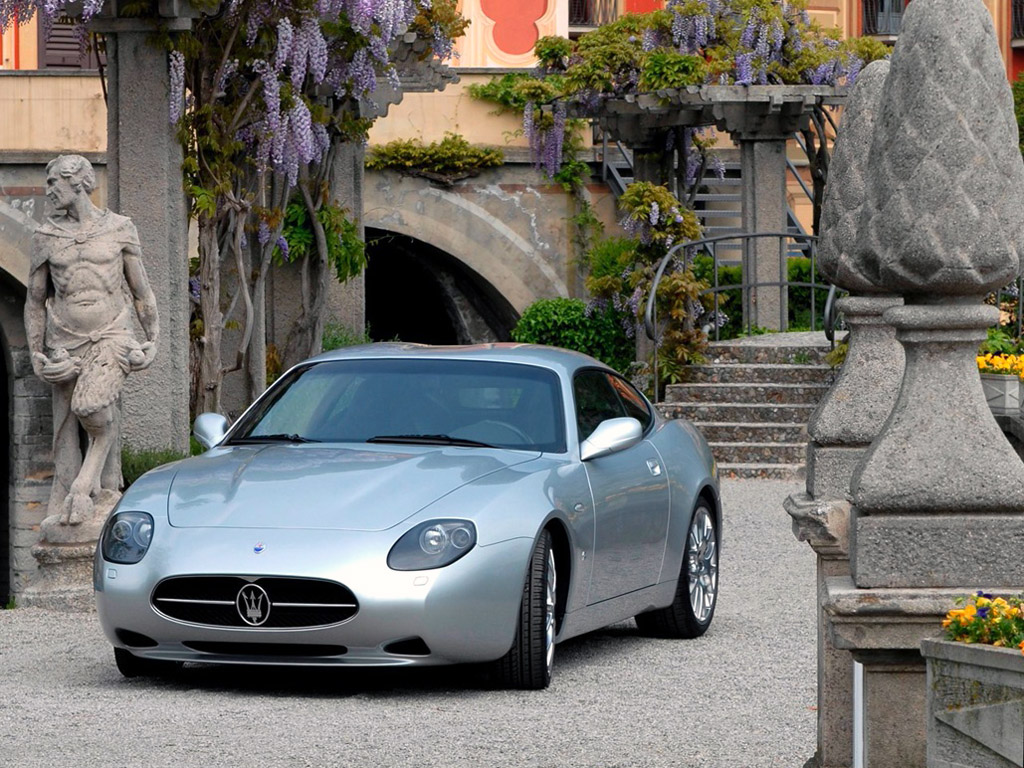
Maserati GS Zagato

The GS Zagato keeps the Coupe shape with 2 doors from the series model.details about price have not been revealed yet.The car is built for two persons and is shorter than the series Spyder with almost 20 cm. For the moment, the constructers have not offered information about the package engine/transmission, but it seems they will be the same as the series model.Zagato Team declares that the new model offers superior characteristics at handling and curve stability chapters. One of the technical arguments that support the italians afirmation is the fixed hood capable of increasing the torsion rigidity of the car’s body.The traditions are kept in the most classic style that has inspired many car designers in the 50’s and 60’s. Maserati GS Zagato will be presented on the show Concours d’Elegance Villa d’Este that will be opened in Cernobbio (Italy) 20 -22 April 2007.
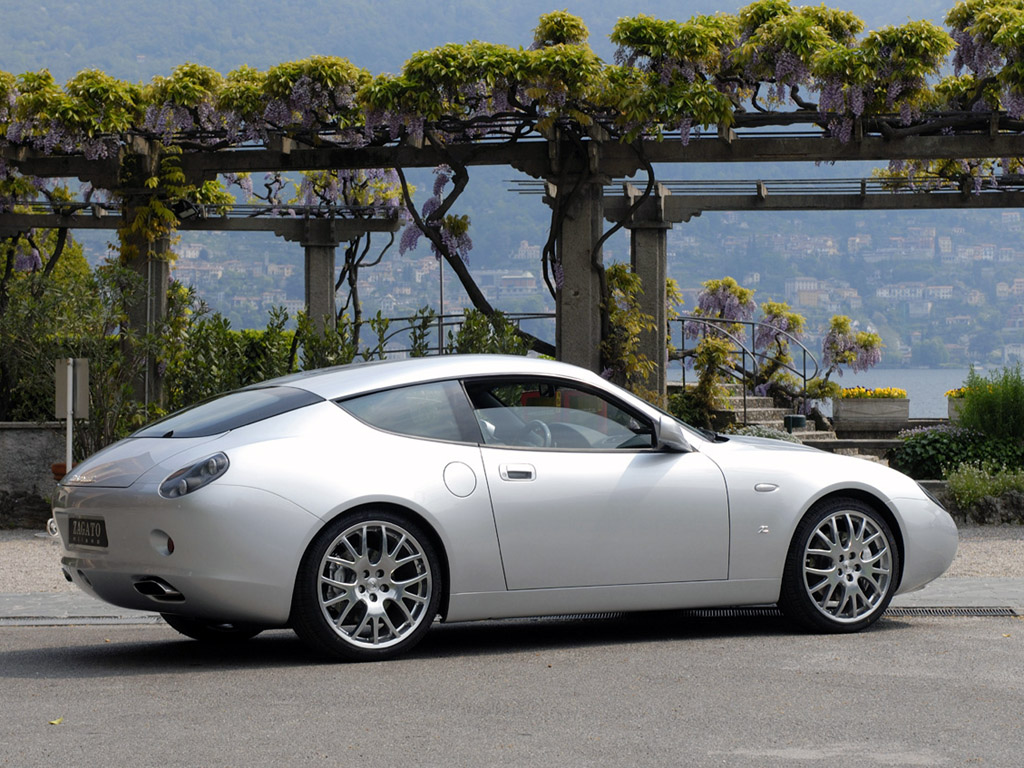
Maserati GS Zagato back view

April 26, 2007 at 3:40 pm | 2 comments

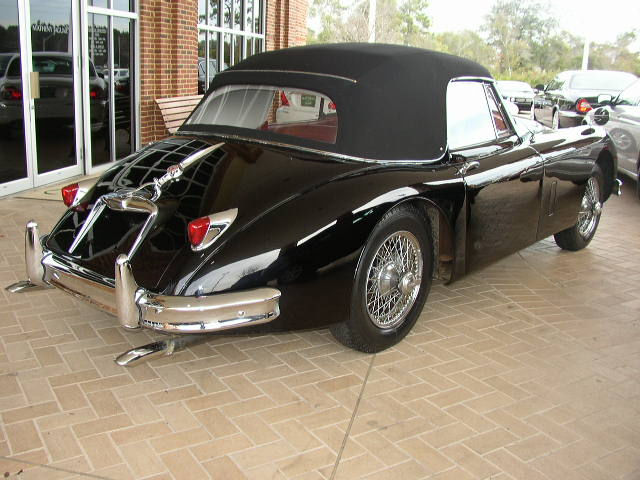
Jaguar XK150

The Jaguar XK150 is a sports car manufactured by Jaguar Cars between the years 1954-1957.

The XK140 is being replaced by the new Jaguar XK150. During its manufacture, the XK150 was available in the models Drop Head Coupe and Fixed Head Coupe. The Roadster model was later released in the year 1958.

Latest features have been employed in the XK150 compared to the XK140. The single piece windscreen was used for the first time and the bonnet has been widened. The Roadster’s bulkhead has been moved a bit back which makes it about 4 inches longer.

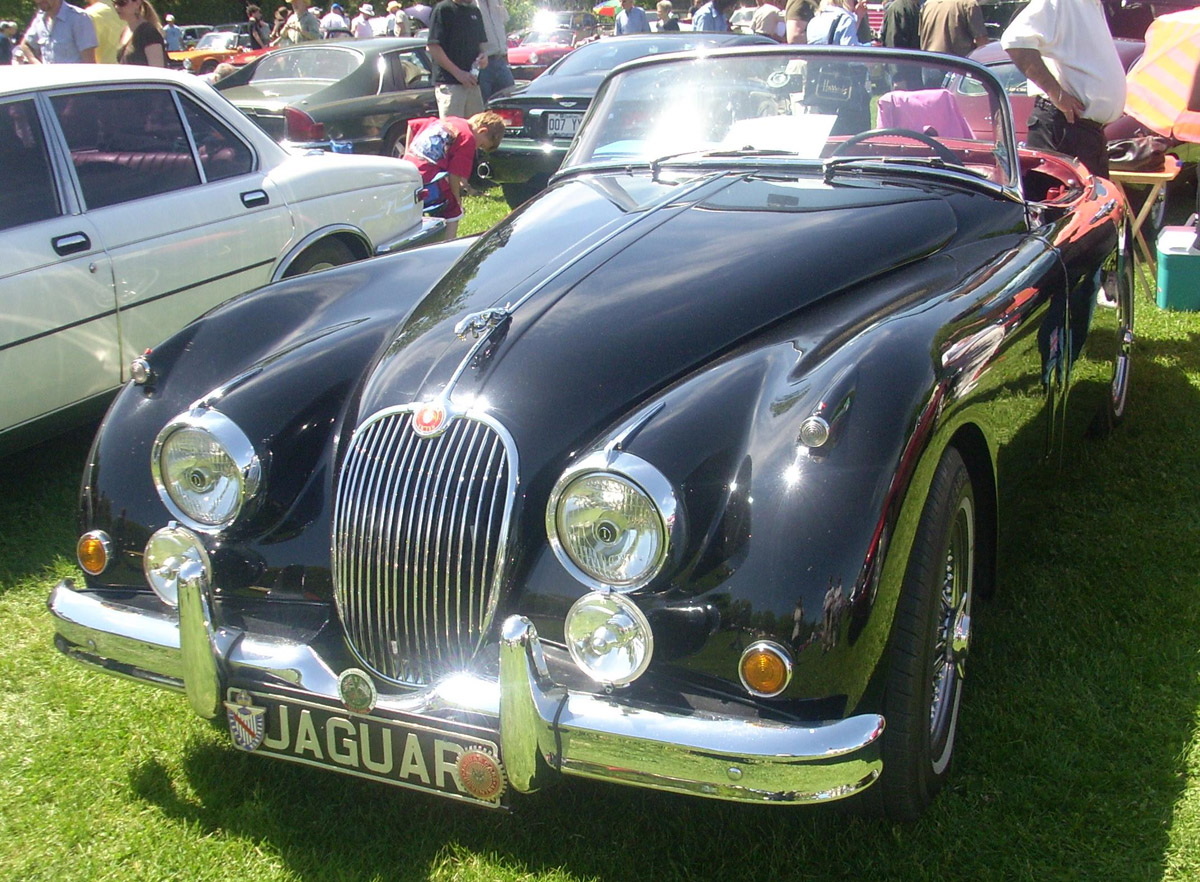
1958 Jaguar XK150 at the 2008 Hudson British Car Show

The same 3.4 liter engine that was used in XK140 has also been used in XK150, where some changes had been made. The XK150 delivers a power of about 210 bhp at 5500 rpm.

In the year 1960, a new version has been launched where the capacity of 3.4 engines has been increased to 3.8, that delivers an output power of 265 bhp, reaches the speed of 60 mph in just 7.0 seconds and attains a top speed of 135 mph. The chassis and suspension were the same, which have been used in the XK140 model and for the first time, the four wheels Dunlop disc brakes have been introduced in the XK150.

Specifications for the XK150 3.4

Years Produced: – 1957-1959
Type: – sports car with 2 doors
Body Type: – steel body
Length: – 177 in
Width: – 32.0 in
Engine: – dual overhead-cam 3.4 L straight-6 XK engine
Displacement: – 3442cc
Horsepower: – 210 bhp @ 5500 rpm
Brakes: – disc
0-60 mph: – ——
Top speed: – ——

Specifications for the XK150 3.8

Years Produced: – 1959-1960
Type: – 2 doors sports car
Body Type: -steel body
Length: – 177 in
Width: – 32.0 in
Engine: – dual overhead-cam 3.4 L straight-6 XK engine
Displacement: – 3442cc
Horsepower: – 260 bhp @ 5500 rpm
Brakes: – disc brakes
0-60 mph: – 7sec
Top speed: – 135mph

April 26, 2007 at 4:21 am | 1 comment

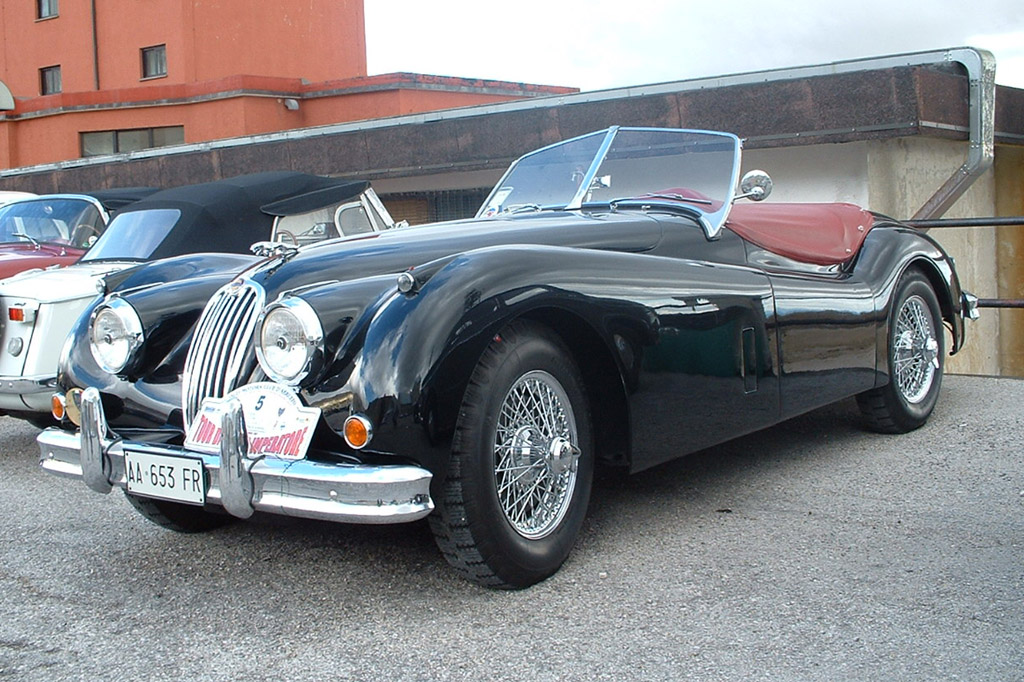
Jaguar XK140

The Jaguar XK140 is a sports car manufactured by Jaguar Cars between the years 1954-1957.

The Jaguar XK140 is an upgraded model over its predecessor the Jaguar XK120. The upgraded features included the rack and pinion steering, tube type shock absorbers and modern braking system. The same Jaguar XK engine was used in this car, which was also used in the Jaguar XK120. The engine delivers an additional 10 hp and up to 190bhp compared to theXK120.

In the 1955 models, the major change was the front and rear bumpers, flashing direction indicators which is being operated by a switch. The front grill is the same, which is used in the XK120. On the top of the grill, there is the Jaguar mascot and also a chrome strip. The chrome strip contains a red shield where the words “Winner Le Mans 1951-53” have been inscribed in gold.

The 1956 model of the Jaguar XK140 was the first where automatic transmission has been employed. The Jaguar XK140 has been launched in three different body styles; the Roadster which is an open two-seater, where the top of the car can be closed or opened within a few seconds. The interiors are completely made of leather; curtains are made of plastic and the canvas can be removed.

Specifications
Years Produced: 1954-1957
Model: Roadster
Body Type: Steel body
Length: 14ft 4.5in
Width: 5ft 4.5in
Engine: dual overhead-cam 3.4 L straight-6 XK engine
Displacement: 3442cc
Horsepower: 190 bhp @ 5500 rpm
Brakes: drum
Transmission: 4-speed Automatic
0-60 mph: 9 sec
Top speed: 121 mph

April 26, 2007 at 4:03 am | 5 comments

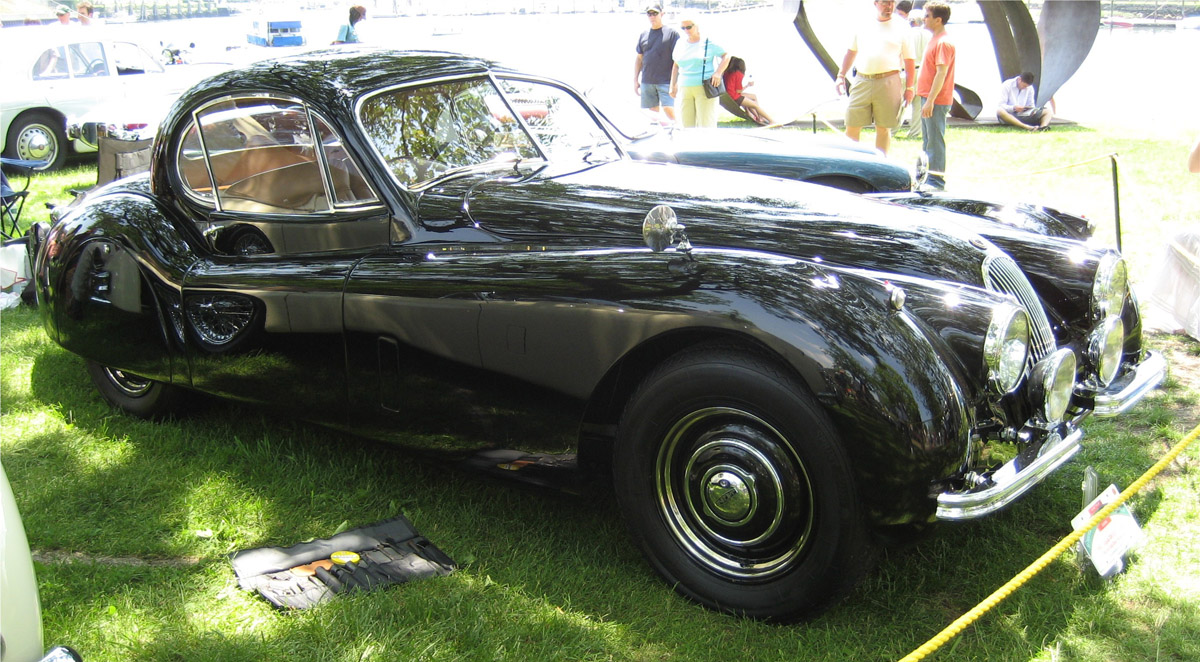
Jaguar XK120

The Jaguar XK120 is a sports car being manufactured by Jaguar Cars between the years 1948 to 1954.

The XK120 is a Roadster that has been launched in the year 1948 at the London Motor Show; also, the new XK engine has been introduced. The car reaches a top speed of 120 mph, due to the 120 mph speed it was named XK120. The XK120 is also the fastest car at the time of its production. The XK120 was first launched as a Roadster, then as a Drop Head Coupe in the year 1953 and later as a Fixed Head Coupe in the year 1951.

1953 Jaguar XK120 Coupe Black

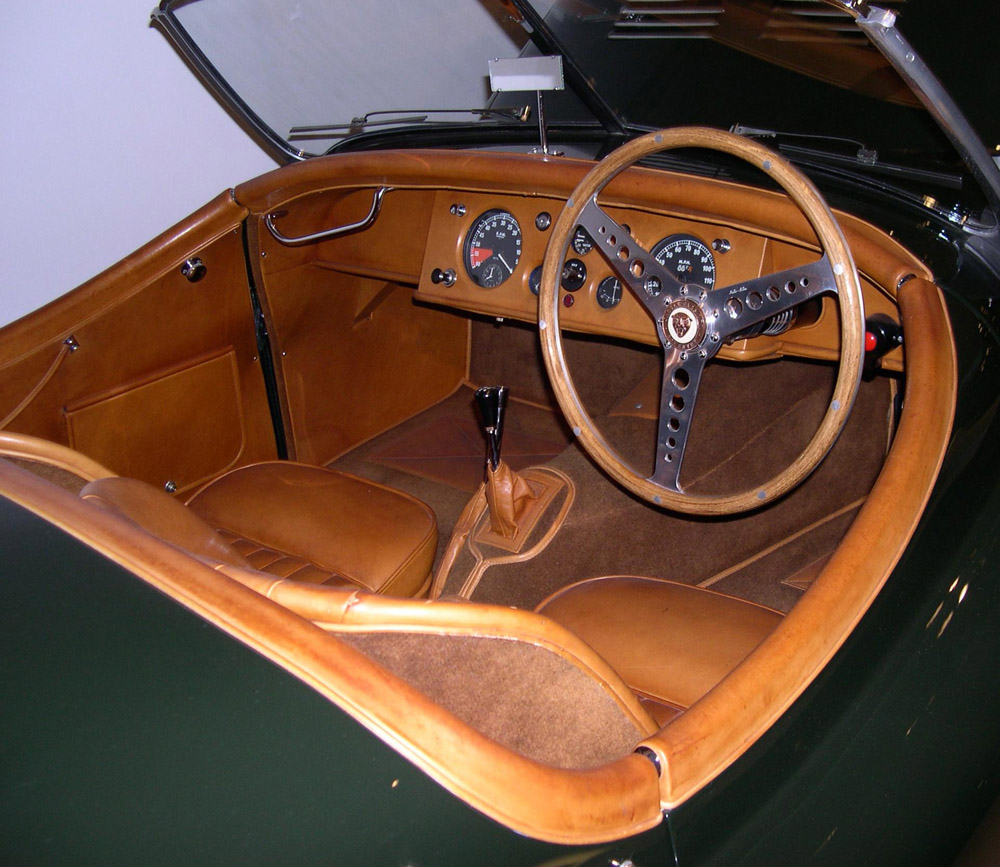
The body of the Roadster is hand built which contained aluminum bodies on the ash borders. Later in the 1950s, steel was used in the place of aluminum, but there were no changes in the aluminum doors, boot lid and bonnet. The 3.4 liter straight-6 XK has been used in this car which delivers an output power of about 160 bhp with 8:1 compression ratio. In addition, the 7:1 compression ratio was also available for more mileage. The dash board is made of leather, torsion bar front suspension has been used in all the XK120 models, the steering can be adjustable, drum brakes have been used at the front and back wheels. Also, detachable side screens are used at the back of the seats.

The Drop Head Coupe contains a canvas top which can be folded; the windscreen used in this model is fixed. The dash boards are made of wood, rear wheel arches are covered with removable spats which gives a stunning look, and the center lock wire wheels have been provided in the car.

1950 Jaguar XK120 Interior

Specifications for the XK120 3.4

Years Produced: – 1948-1954
Body Type: – steel body
Length: – 177 in
Width: – 32.0 in
Engine: – dual overhead-cam 3.4 L straight-6 XK engine
Displacement: – 3442cc
Horsepower: – 160 bhp @ 5000 rpm
Brakes: – drum
Specifications for the XK120 3.4 SE

Years Produced: – 1951-1954
Body Type: – steel body
Length: – 177  in
Width: – 32.0 in
Engine: – dual overhead-cam 3.4 L straight-6 XK engine
Displacement: – 3442cc
Horsepower: –  210 bhp @ 5700 rpm
Brakes: – drum brakes

April 26, 2007 at 12:18 am | 1 comment

Kia KND-4 Concept

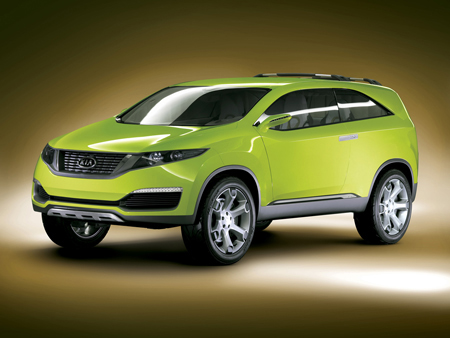
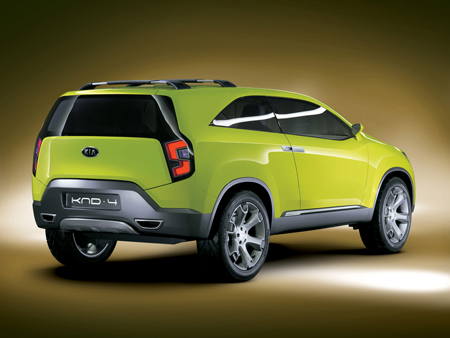
kia-concept-2007.jpgkia-concept-2007-2.jpg

Kia has chosen April and the Auto Show from Seoul for making public its new SUV concept. The car is called KND-4 and is painted in light green, its colour being very suggestive for its eco-friendly character. Although it is perfectly functional, the SUV will never be a series product in the current shape, this being just a design exercise. But the future off road cars of compact class from KIA will borrow a good part from the elements experimented on the KND-4. The prototype is the first KIA car that speaks about its new vision “Designology”The word describes itself as a happy combination of the bold design with last hour technology and represents a new vision by which Koreans are building their future cars. KND is a concept that wants to prove the KIA capacity of conceiving and producing sophisticated cars as design and with great technological capability, wanted to understate one of Kia Motors managers.The concept has four seats and the interior is almost SF. It is dressed in light colours being enhanced by aluminium inserts and “hidden” lights. At the level of equipment, KND 4 could easily enter the IT category. The driver has a lot of road condition info, state of the vehicle, information provided by a series of sensors that “cover” the entire car.KND 4 is monitored with a propeller of 2.2 litter, diesel (with very low level of pollution). The integral traction is insured by the newest KIA transmission system, called Active Torque Transfer (ATT). The system is directing the power of the engine in conditions of loosing traction to the wheels with higher adherence.The name of the KND car comes from the entitling of the design centre of Kia from Korea which has made the project (Kia Namyang Design Centre). The number 4 means that the prototype has full traction.

April 24, 2007 at 5:44 am | 3 comments

->