Jaguar E-Type

The Jaguar E-Type was produced by Jaguar Cars in between the years 1961 to 1974.

The Jaguar E-Type was as icon in the 1960s with its stunning looks and high performance where 70,000 cars have been sold during its period. On March 2008, the Jaguar E-Type was listed first in the “100 Most Beautiful Cars” by the Daily Telegraph and in the year 2004 Jaguar E-Type was listed in the first place in “Top Sports Cars of the 1960s” by Sports Car International magazine.
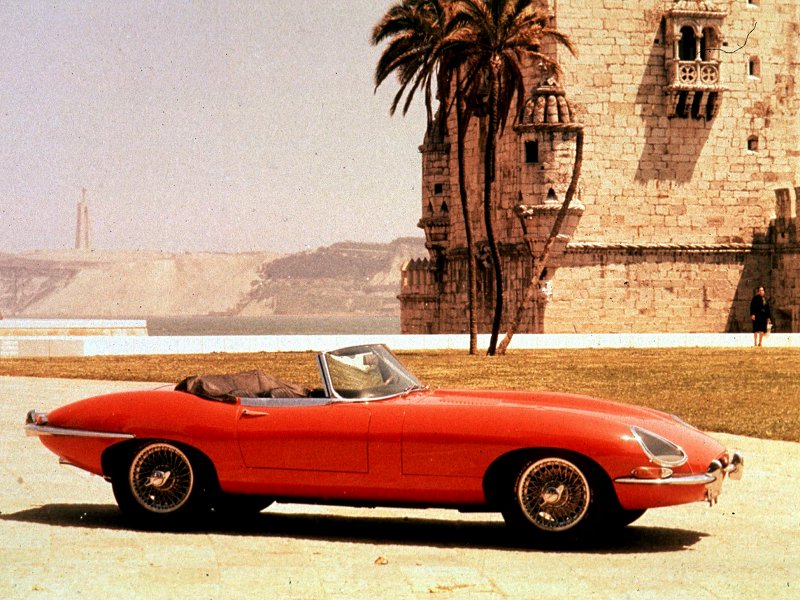
Jaguar E-Type 480

The Jaguar E-Type was actually designed to show the luxury and high performance features in a two seater coupe. The Jaguar E-Type was launched in three series which are

Series 1:
The Series 1 was launched in the year 1961 and ended in the year 1967. The Series 1 consists of a 3.8 liter six cylinder XK6 engine which was also used in the Jaguar XK150. In the year 1964 the 3.8 liter engine has been increased to 4.2 liters. The independent coil spring rear suspension was used in all the E-Type series.

The headlights are glass covered; tail and signal lights are located above the bumpers, a 4-speed gear box was used, seats are more comfortable, the electrical and braking system has been improved. Disc brakes have been used in the front and back which are power assisted. Later in the year 1966, 2+2 coupe was introduced with an automatic transmission and the body of the roadster is about 229 mm long.

Specifications
Body Style: 2-door coupe, convertible
Engine: 3.8 litre, 4.2 litre
Wheel base: 2438mm
Height: 1194 mm
Length: 4458mm
Width: 1657 mm

Series 2:
The Series 2 was launched in the year 1968 and ended up in the year 1971. The headlights are glass covered, taillights and indicators are located below the bumpers and upgraded braking system has been used. The interiors and dashboard have been modified and the flick switches were employed according to the safety regulations.

Specifications
Body Style: 2-door coupe, convertible
Engine: 4.2 litre XK16

Series 3:
The Series 3 was launched in the year 1971 and ended in the year 1975. The Series 3 consists of a 5.3 L cylinder where the Jaguar V12 engine was introduced for the first time. During its period, a total of 15,290 units have been manufactured.

Motor Sport:
In the year 1963 the E-Type won the Australian GT Championship, B-Production Championship in the year 1975 and also won the National Championship in the year 1980.

Specifications
Body Style: 2-door 2+2coupe, convertible
Engine: 5.3 litre JaguarV12
Wheel base: 2667 mm
Height: 1219 mm
Length: 4683 mm
Width: 1676 mm
Weight: 1,558 kg
August 15, 2006 at 4:46 pm | 1 comment

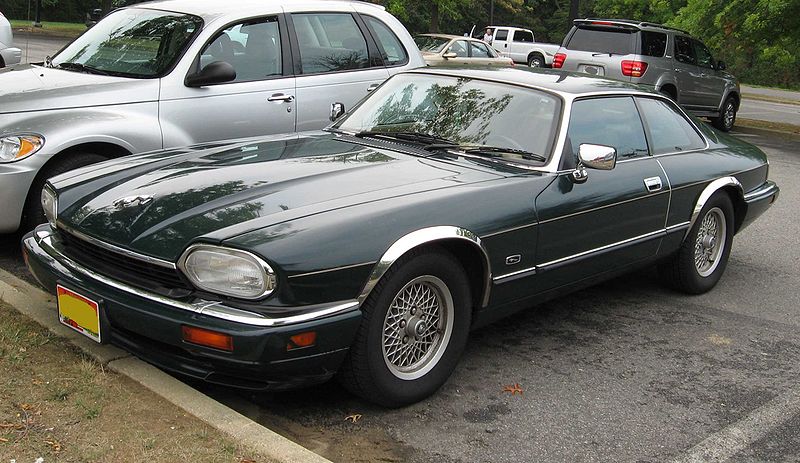
Jaguar XJS

The Jaguar XJS is a grand tourer produced by Jaguar cars; it is also the predecessor of the Jaguar E-Type. The Production of the XJS started in the year 1975 and ended up in 1996.

1975-1980:
In between the years 1975-1980, the Jaguar V12 petrol engine was used with automatic and manual transmissions, later the manual transmission has been left out. The Jaguar XJS was able to reach the speed of 60 mph in 8.9 seconds and attains a top speed of 142 mph.

Jaguar XJS 480

Specifications
Body Style: 2-door coupe
Engine: 5.3 liter Jaguar V12

1981-1990:
From the year 1981, a high efficiency engine was used with an output power of 295hp. A number of changes have been made to the exteriors, interiors, bumpers, dashboard and a new five spoke alloy wheels have been introduced. In the year 1982, the XJS stood first and second in the RAC Tourist Trophy Race.

In the year 1983, the Cabriolet made its entry in the 3.6 Jaguar AJ6 Engine by eliminating the rear seats and making it as a 2-seat. For the first time 5-speed manual transmission has been used in the 6-cylinder. In between the years 1988 and 1989, the XJR-S version has been introduced with a V12 5.3 engine which also marked the win at Le Mans.

Specifications
Body Style: 2-door coupe, convertible
Engine: 5.3 liter Jaguar V12
Transmission: 3-speed automatic
Wheel base: 2591 mm
Height: 1214 mm
Length: 4869 mm
Width: 1793 mm

1991-1996:
The Jaguar XJS was re-engineered in the year 1991 where the rear windows have been enlarged. The V12 engine has been increased to 6 liter which delivers an output power of 304hp. The braking system has been modified and the front face has been lifted up.

Specifications
Body Style: 2-door coupe, convertible
Engine: 4.0 L AJ6 I6, 4.0 L AJ16 I6, 5.3 litre Jaguar V12
Transmission: 4-speed automatic
Wheel base: 2591 mm
Height: 1237 mm
Length: 4856 mm
Width: 1882 mm

August 15, 2006 at 4:23 pm | 5 comments

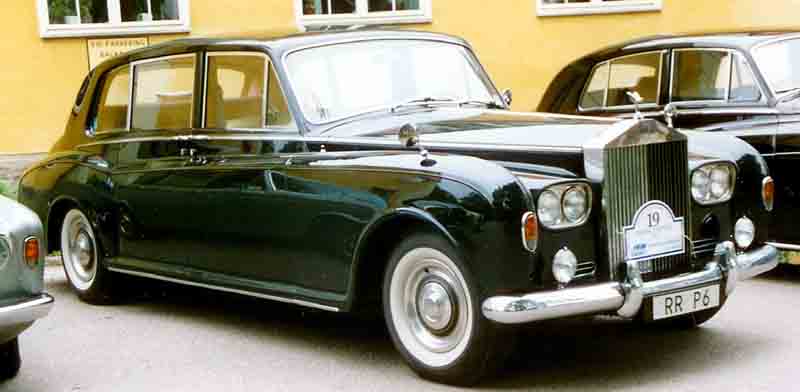
Rolls-Royce Phantom VI

The Rolls-Royce Phantom VI is manufactured by Rolls-Royce Motors at the Mulliner Park Ward, London in between the years 1968-1991.

The launch of Phantom VI set a high standard in Rolls-Royce Motors at the time of its production. The Phantom VI has a stylish front face and features a powerful engine. The capacity of the engine is about 6,750 cc, where 3-speed automatic transmission gear box has been used. The coil springs has been used in the front and leaf springs at the back.

Rolls-Royce Phantom VI 480
Rolls-Royce Phantom VI
Photo by: Lars-Göran Lindgren Sweden, Creative Commons

The Phantom VI consists of a V8 engine which has a capacity of 6,230 cc and stroke of 91.5 mm and bore of 104 mm which was later converted to 6,750 cc, with twin SU carburetors and a 3-speed automatic gearbox.

A total of 374 Phantom VI cars have been manufactured at its time. The Phantom VI is also one of the cars in Queen Elizabeth II’s fleet. The Phantom VI car can also be seen in the movies “Invasion: UFO” which was released in the year 1972 and “Banzai Runner” released in the year 1987.

Specifications

Engine: 6.2 liter Rolls-Royce V8 and 6.75 liter Rolls-Royce V8
Displacement: 6,750 cc
Transmission: 3-speed automatic
Wheel base: 3,700 mm
Height: 1,800 mm
Length: 4,260 mm
Width: 2,000 mm
Weight: 2.5 tons

August 15, 2006 at 3:36 pm | 2 comments

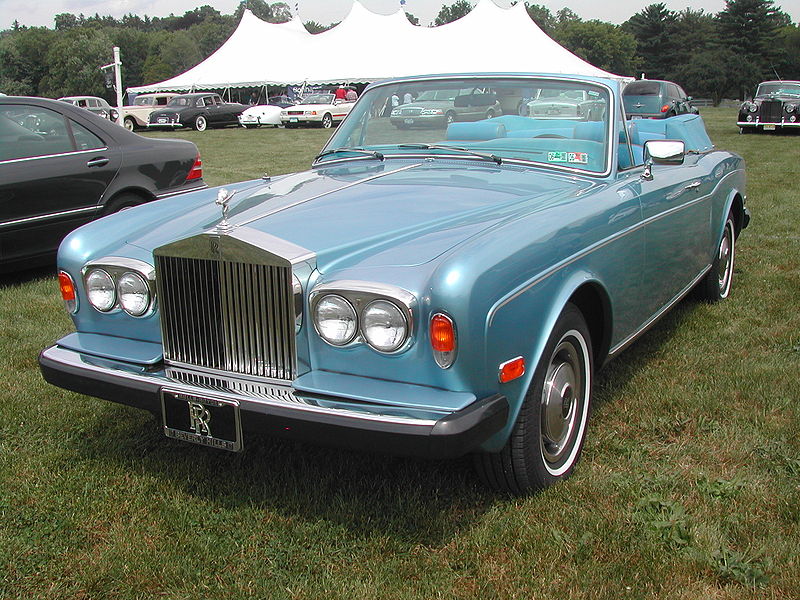
Rolls-Royce Corniche

The Rolls-Royce Corniche is a coupe and Convertible car which was produced by Rolls-Royce Motors in between the years 1971-1996.

The Rolls-Royce Corniche was available in coupe and convertible, it consisted of a standard V8 Rolls-Royce engine along with aluminum cylinder heads and aluminum-silicon alloy black which were cast with wet iron cylinder liners. The stroke in the car is about 99.1 mm and the bore is about 104.1 mm. The twin SU carburetors have been fitted; Bosch fuel injection was also added in the year 1980.

Rolls-Royce Corniche 480

The car consists of 3-speed automatic transmission; four wheels independent suspensions along with coil springs augmented that have been increased with a hydraulic system. Disc brakes are used in all four wheels and later ventilated disc brakes have been added in the year 1972.

Corniche II
The Corniche II model has been launched in the year 1986 that consisted of rubber and alloy bumpers which have been replaced with the previous chrome structures. Also, an oil cooler was used in the place of aluminum radiator. The other additional features included the new pattern at the rear license plate, modified dashboard, style rims and designer seats.

Corniche III
The Corniche III model has been launched in the year 1989 at the Frankfurt Motor Show. The standard air bags has been used in this model which was also used in the Corniche II, advanced suspension systems have been installed, bumpers have been painted in the car color and some changes have been done to the console and dashboard.

Corniche IV
The Corniche IV was launched in the year 1993, where the production of the Corniche IV has been done in Crewe Town, England. The major changes compared to the Corniche III is a glass rear window used in place of the plastic ones. The case mechanism and the air bags have been modified.

Corniche V
The Corniche V was launched on January 2000. The Corniche V is also considered as the costliest car manufactured by Rolls-Royce at its time with a starting price of 359,900 US Dollars.

August 15, 2006 at 3:31 pm | No comment

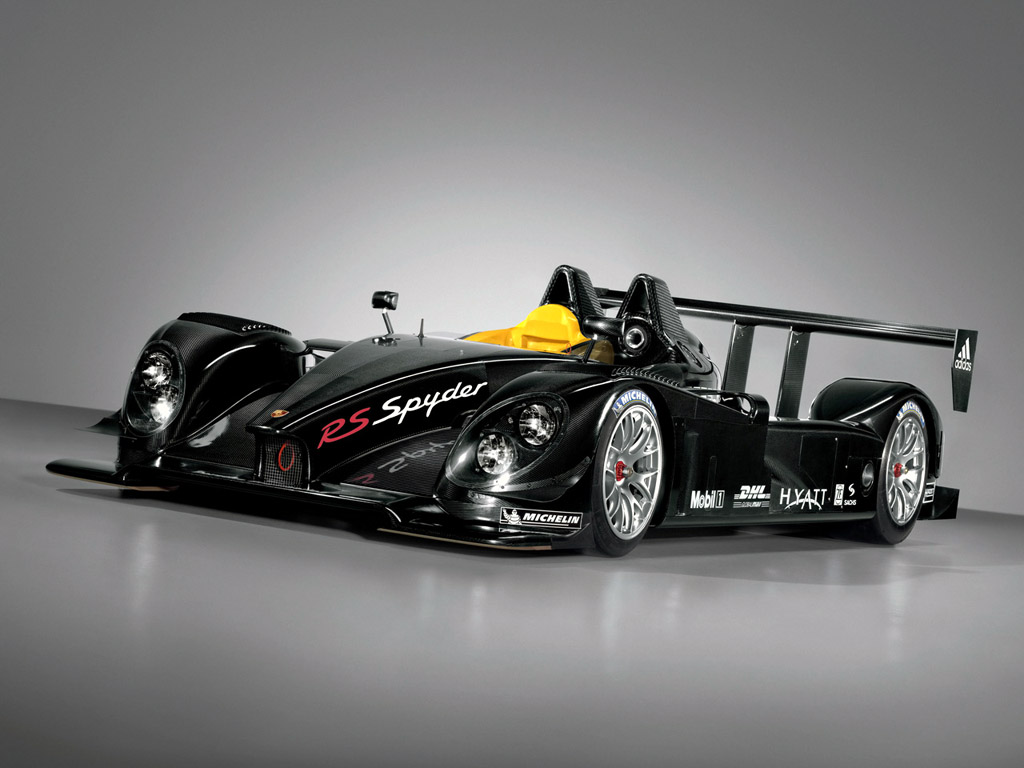
Porsche RS Spyder

The Porsche RS Spyder is a LMP2 (Le Mans Prototype) race car manufactured by Porsche.

With the launch of RS Spyder, Porsche also marked its return in the car racing since the finish of Porsche 911 GT1 in the 1998 season and also the RS Spyder marks the Porsche return in the 24 Hours of Le Mans.

Porsche RS Spyder 480

In the year 2005, the Porsche RS Spyder made its debut at the American Le Mans Series, Mazda Raceway Laguna Seca. The RS Spyder was victorious at Laguna Seca which was driven by Lucas Luhr and Sascha Maassen and stood in the first and fifth places.

In the year 2006 the RS Spyder participated in the 12 Hours of Sebring which was driven by Lucas Luhr where it set a record of completing a lap in less than 1:50 minutes and stood in the second place. It also participated in the Third ALMS Race which was also a success.

On September 28, 2006, the new 2007-Spec RS Spyder was displayed at the Paris Motor Show where the power has been increased in the new RS Spyder. Two units of the new RS Spyder have been purchased by the Dyson Racing Team for the 24 Hours of Le Mans, however the RS Spyder had not participated in the 2007 24 Hours of Le Mans.

For the year 2008, Porsche launched an updated version of RS Spyder which was driven by Jeroen Bleekemolen, Jos Verstappen and Peter van Merksteijin along with Essex team which stood in second place.

Specifications

Class: race car
Engine: 3.4liter V8
Transmission: 6-speed sequential
Power: 480bhp and 503 bhp
Weight: 775 kg

August 15, 2006 at 3:08 pm | No comment

->